
Step 3. Rewriting
Documentation Rewriting and Restructuring
Having a documentation structure in place is the foundation. Rewriting is where it becomes real. This is the phase where existing content is rewritten, restructured, and migrated into the new architecture, so your knowledge base is finally clear, consistent, and complete.
This work is done for you, end to end. You don’t need to manage writers, review structural decisions, or figure out what to rewrite first. That’s handled.
What this phase covers
Every rewriting engagement is scoped based on your content volume and the state of your existing documentation. For most teams, the work includes:
Rewriting and restructuring existing content
Every article is reviewed, rewritten where needed, and restructured to fit the defined architecture. Content that works is kept. Content that doesn’t is fixed.
Structuring content into reusable modules
Content is broken into modular units that can be reused across articles, products, and audiences. This reduces future maintenance and prevents duplication from creeping back in.
Applying article types, templates, and naming rules
Every article is written to its defined type, formatted to its template, and named according to the naming standards defined in the architecture phase.
Content migration
Where needed: content is migrated from Word documents, PDFs, or other formats into the selected documentation platform, correctly structured and ready to publish.
Removing duplication and separating overlapping content
Articles that cover the same ground are consolidated. Content that tries to do too many things is separated into focused, single-purpose articles.
Creating new content for identified gaps
Where the audit identified missing content — or where existing content is too outdated to salvage — new articles are written from scratch, aligned with the architecture and templates.
Metadata tagging
Content modules are tagged with the metadata defined in the architecture, so customer-specific content, user roles, and product versions surface correctly for the right audience.
Validation against product workflows
Every article is validated against real product behavior, so the documentation matches how the product actually works.
What you get
- Rewritten and restructured documentation, aligned with the architecture
- New content for identified gap areas
- Content migrated into your platform, correctly structured and ready to publish
- Metadata-tagged modules that surface the right content for the right audience
- Clean, structured content your AI tools can reliably read and surface
What changes after rewriting
Before
Documentation exists but nobody trusts it.
Articles are outdated, inconsistent, and written in different styles by different people.
Customers can’t find answers. New hires still ask questions after reading the docs.
AI tools pull unreliable answers.
After
Every article is clear, consistent, and aligned with the product.
One voice, one structure, throughout.
Customers find answers through self-service. New hires get up to speed without asking.
AI tools have clean, structured content to work with.
Continuity from structure to content
The same person who defines the structure writes the content. No gaps between strategy and execution, no misunderstandings about what the architecture intended, no loss of context between phases.
What clients say
[Anna brought] a rare mix of strategic thinking, sharp editing, and an intuitive sense for brand voice that makes it feel like she’s been part of your team for years. She took our messy ideas and insights and turned them into clear, engaging content that hits the right tone.
[She has] an incredible capacity for technical writing that also relates to the end user… she worked directly with developers to present their work in the most relatable way possible.
Having her help allowed our team to focus on building the product and not on updating documentation every time we pushed a new feature or killed a bug. Her excellent work helped make a daunting mountain of features more accessible to our customers.
Hand it over. Walk away. Come back to documentation that works.
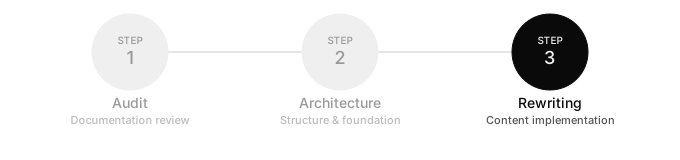
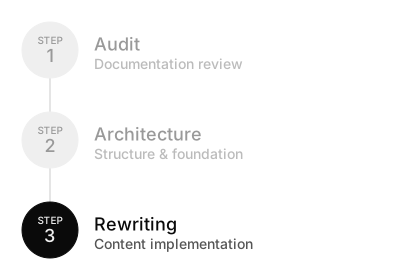
Where this fits in the 3-phase process
Documentation Rewriting is the final phase of the three-phase engagement, following the Documentation Audit and Documentation Architecture.
Investment
Rewriting is priced by the hour. The total investment depends on the volume of your existing content, the number of new articles, and whether the engagement includes content migration.
Most rewriting projects are completed within six months. Smaller knowledge bases take significantly less.
What I need from you: access to your existing documentation, your platform, and (where applicable) the architecture defined in the previous phase.
Pricing is confirmed after an initial conversation, once I have a clear picture of your content volume and scope.
I’ll review your documentation and give you a clear scope and estimate before any commitment is made.
FAQ
How long does rewriting take?
It depends on the volume and state of your existing content. Smaller knowledge bases can be completed in weeks. Larger ones typically take up to six months. Scope and timeline are defined once I have a clear picture of your content.
Do I need to complete the Audit and Architecture phases first?
Not necessarily. If you’ve already done architecture work with another consultant or in-house, we can move straight to rewriting. If you’re not sure whether you need architecture first, the diagnostic call will tell you.
What happens after the rewriting phase is done?
The knowledge base is ready to hand over to your team. Most clients maintain it independently from that point; the structure and rules make that straightforward. If you’d prefer ongoing support, we can continue working together to keep the documentation aligned as the product evolves.
Ready to turn your documentation into something your team and your customers can rely on?
Get in touch and I’ll tell you honestly where to start.