
The Knowledge Base System (DIY)
A complete system for structuring, naming, and maintaining a knowledge base as it grows.
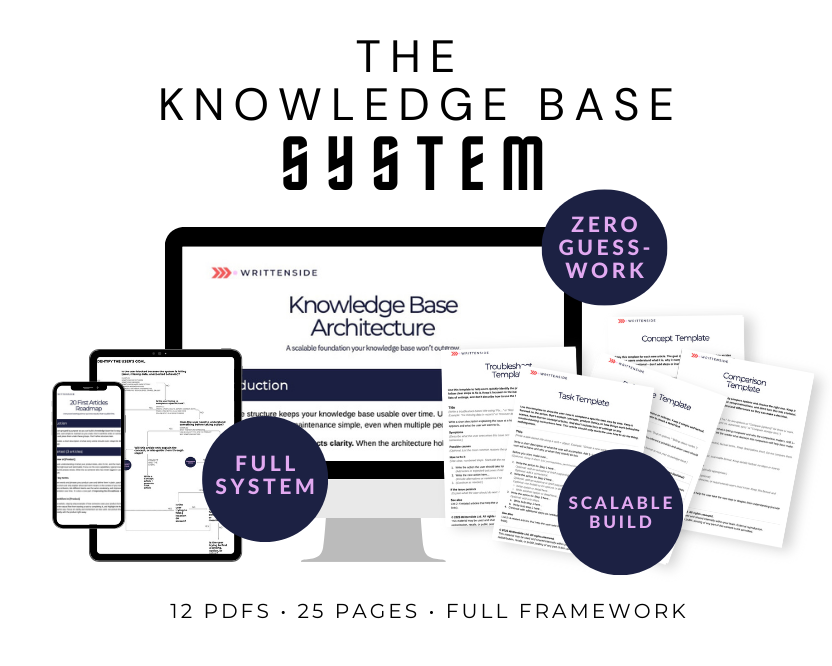
This package contains the full Knowledge Base System: structure, naming standards, templates, and placement rules, designed for use with your existing tools.

Why Knowledge Bases Fail as They Grow
- Naming becomes inconsistent.
- New features don’t fit cleanly into the existing structure.
- The same information gets published in multiple places.
Fix the Structure First
The Knowledge Base System fixes the problem at the source. Instead of reacting to mess, you apply a predefined structure with the rules already built in.
The system determines:
- how content is structured
- how articles are named
- what each article is allowed to do

What's Inside
Start Here: How to Use This System
A simple, step-by-step guide that shows you exactly how to work through the materials so you don’t get stuck.
Knowledge Base Architecture
The foundation of the system.
The 3 Most Common Mistakes + Quick Fixes
A short, practical guide to the mistakes that break most knowledge bases, and how to avoid them before they cause rework.
20 First Articles Roadmap
A focused list of the first articles every knowledge base needs, grouped by purpose so you know exactly what to write first and what to ignore for now.
Article Naming Cheat Sheet
Clear naming patterns you can apply immediately to keep titles consistent, scannable, and predictable from day one.
Full Article Template Library
Five writing templates (Task, Concept, Reference, Comparison, Troubleshoot) that cover 95% of the help articles you’ll ever write.
Placement Guide: What Goes Where?
A visual flowchart that helps you decide which article type to use and where content belongs.
Sample Knowledge Base Homepage Layout
A clean, real example of how everything fits together. If you use Notion, you can duplicate it directly and start filling in your own content.
Perfect for Teams Who
- Don’t have a documentation expert and need a clear system they can rely on
- Keep answering the same support questions week after week
- Know their knowledge base is messy, but don’t know where to start fixing it
- Are preparing for growth and want a structure that won’t collapse later
- Would rather build it correctly once than rebuild every 6–12 months
If you’re looking for marketing copy, UI tweaks, or surface-level improvements, this isn’t the right fit. It’s a structural system for teams who want their knowledge base to stand the test of time.

Start Building With a Clear System
You get a complete, pre-built structure including the architecture, article templates, naming standards, and a clear roadmap for what to create first. Everything is designed to work together. Once the system is in place, new content fits without constant rethinking, restructuring, or cleanup.
FAQ
Is this the complete system, or will I still need to figure things out myself?
This is the full system. It covers structure, naming, article types, placement rules, and what to write first. The decisions that usually cause confusion are already made. Your job is to apply them, not invent them.
Will this work with an existing knowledge base?
Yes. You don’t need to rebuild everything. Most teams start by applying the system to new articles and gradually bring existing content into alignment over time.
What format is the system delivered in?
The system is delivered as downloadable PDFs and templates. You get immediate access, and the materials are yours to keep.
What tools does this work with?
The system is tool-agnostic. It works in Notion, Zendesk, Intercom, Confluence, and custom setups. The rules focus on structure, naming, and content purpose, not platform features.
Is this suitable for larger or growing teams?
Yes. The system is designed to remain stable as content volume increases and as more people contribute. The rules don’t change as the knowledge base grows.
Is this a course or ongoing program?
No. This is not a course, cohort, or ongoing program. You receive the system and apply it independently in your own environment.
How long does it take to apply?
That depends on the size and state of your knowledge base. You can start using the system immediately, and it can be applied gradually without interrupting existing work.
Is this "AI-ready"?
Yes, by design. Clear structure, predictable naming, and defined article types make content easier for AI tools to retrieve, summarize, and reuse accurately. AI works best when the underlying content system is clean.
Not ready for the full system yet?
If you’re at an early stage and only need help with your first articles, the Knowledge Base Starter Kit covers the initial structural decisions so you can begin without overthinking.